Travelers today rely on platforms like Google Maps or Zomato to discover food. However, these platforms are optimized for ratings and scale, not authenticity.
This creates a gap:
Local, culturally rich food experiences remain hidden, unstructured, and often mistrusted.
This creates a gap:
Local, culturally rich food experiences remain hidden, unstructured, and often mistrusted.
The 'Challenge'
Travelers struggle to discover authentic, Safe and trustworthy local food vendors, especially street food, due to lack of structured information, hygiene concerns, and over-reliance on generic rating systems.
Project 'Brief'
Design a mobile-first experience that empowers users to discover authentic local food, assess trust and hygiene standards, navigate seamlessly in unfamiliar environments, and make quick, confident dining decisions.
Design 'Process'
The project followed a user-centered, iterative process:
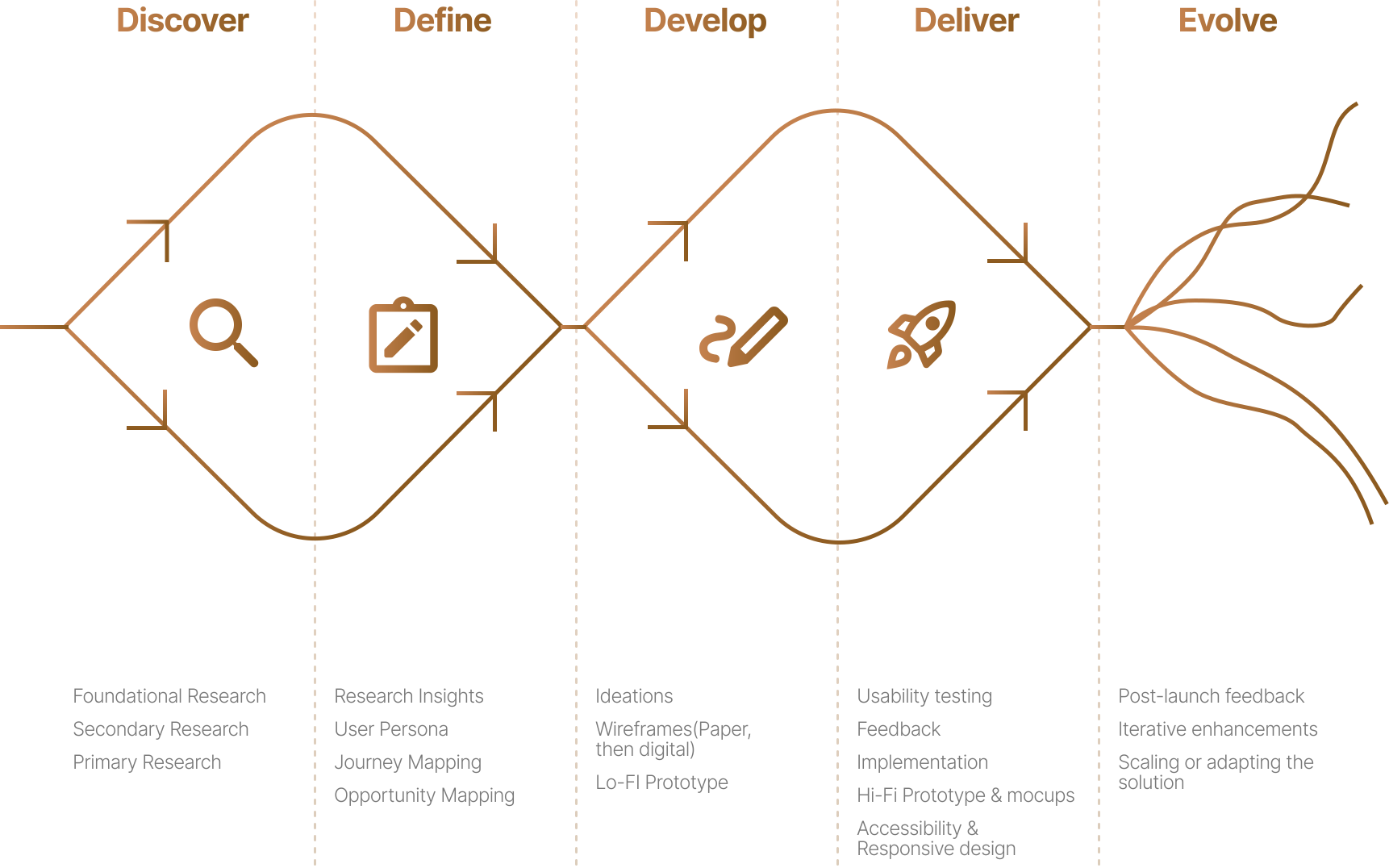
The 'Research'
Research-Backed Recommendations
Set research objectives to explore how users discover local food in new cities and identify gaps in existing apps limiting local vendor visibility.
Foundational
01
Set research objectives to explore how users discover local food in new cities and identify gaps in existing apps limiting local vendor visibility.
Foundational
01
Reviewed top food apps to spot design and usability gaps; analysed user feedback from app stores and forums to uncover pain points and feature needs.
Secondary
02
Reviewed top food apps to spot design and usability gaps; analysed user feedback from app stores and forums to uncover pain points and feature needs.
Secondary
02
Conducted 5 user interviews (India, remote) Studied behavior across Zomato, Swiggy, Google Maps Observed how users choose food in real-world scenarios
Primary
03
Conducted 5 user interviews (India, remote) Studied behavior across Zomato, Swiggy, Google Maps Observed how users choose food in real-world scenarios
Primary
03
Users rely more on visual cues than ratings Hygiene uncertainty creates hesitation Too many options = decision fatigue
Key Observations
04
Users rely more on visual cues than ratings Hygiene uncertainty creates hesitation Too many options = decision fatigue
Key Observations
04
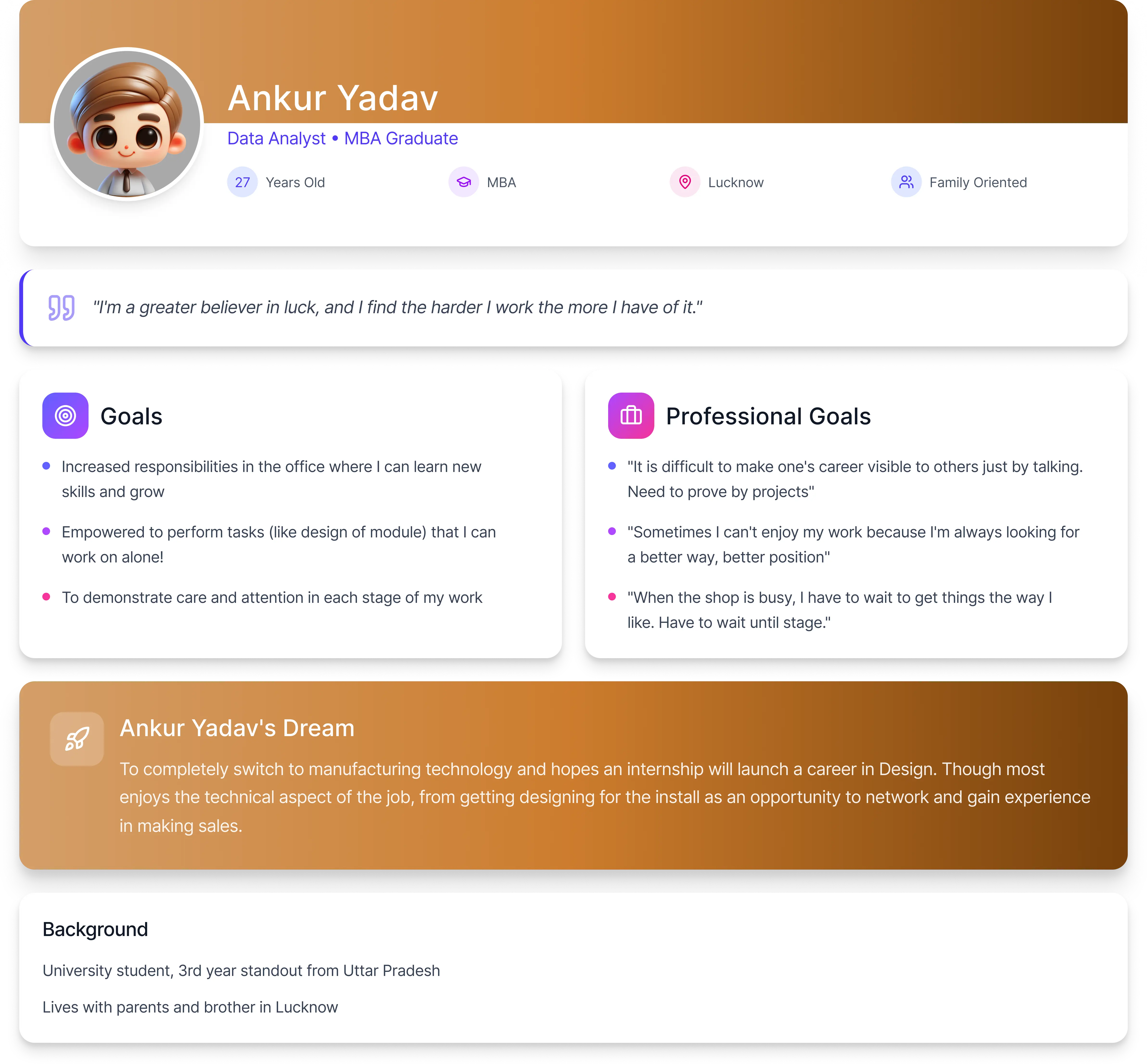
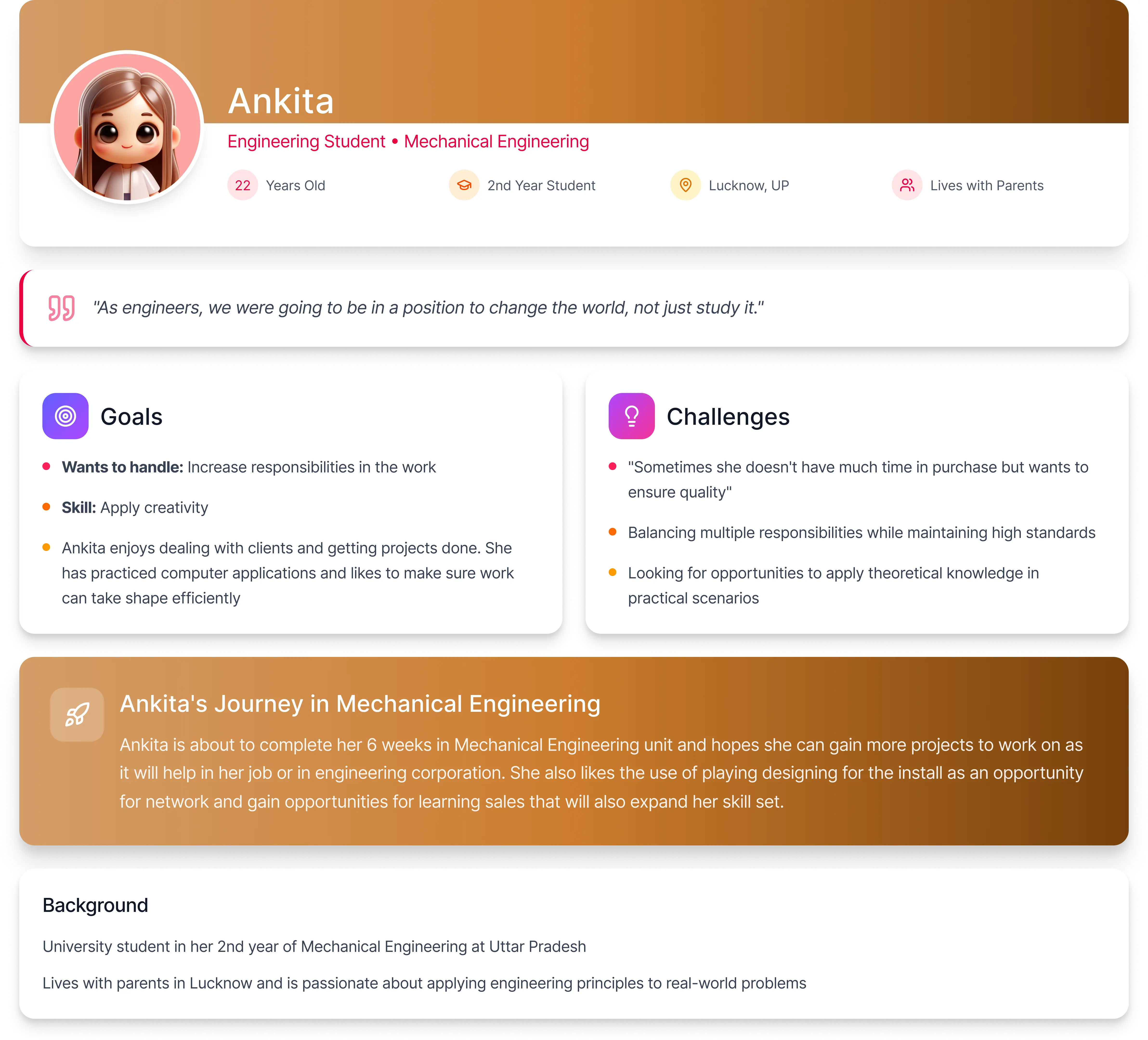
Personas
Research 'Insights'
Users need a way to confidently discover authentic local food without relying solely on ratings or overwhelming choices.
Discovery
“Discovery is not the problem — trust is.”
Discovery
“Discovery is not the problem — trust is.”
Support
People are willing to support local vendors through a trusted digital platform.
Support
People are willing to support local vendors through a trusted digital platform.
Simplicity
Users strongly prefer clean, intuitive interfaces with minimal steps.
Simplicity
Users strongly prefer clean, intuitive interfaces with minimal steps.
Culture
Current apps fail to represent or promote regional food culture.
Culture
Current apps fail to represent or promote regional food culture.
Flow
Seamless and fast ordering experience is a core user expectation.
Flow
Seamless and fast ordering experience is a core user expectation.
Research 'Recommendations'
Research-Backed Recommendations
Build trust layer
Build trust layer
Reduce decision complexity
Enable visual exploration
Support cultural discovery
Concept Directions Explored
Visual-first browsing
Vendor transparency
Vendor transparency
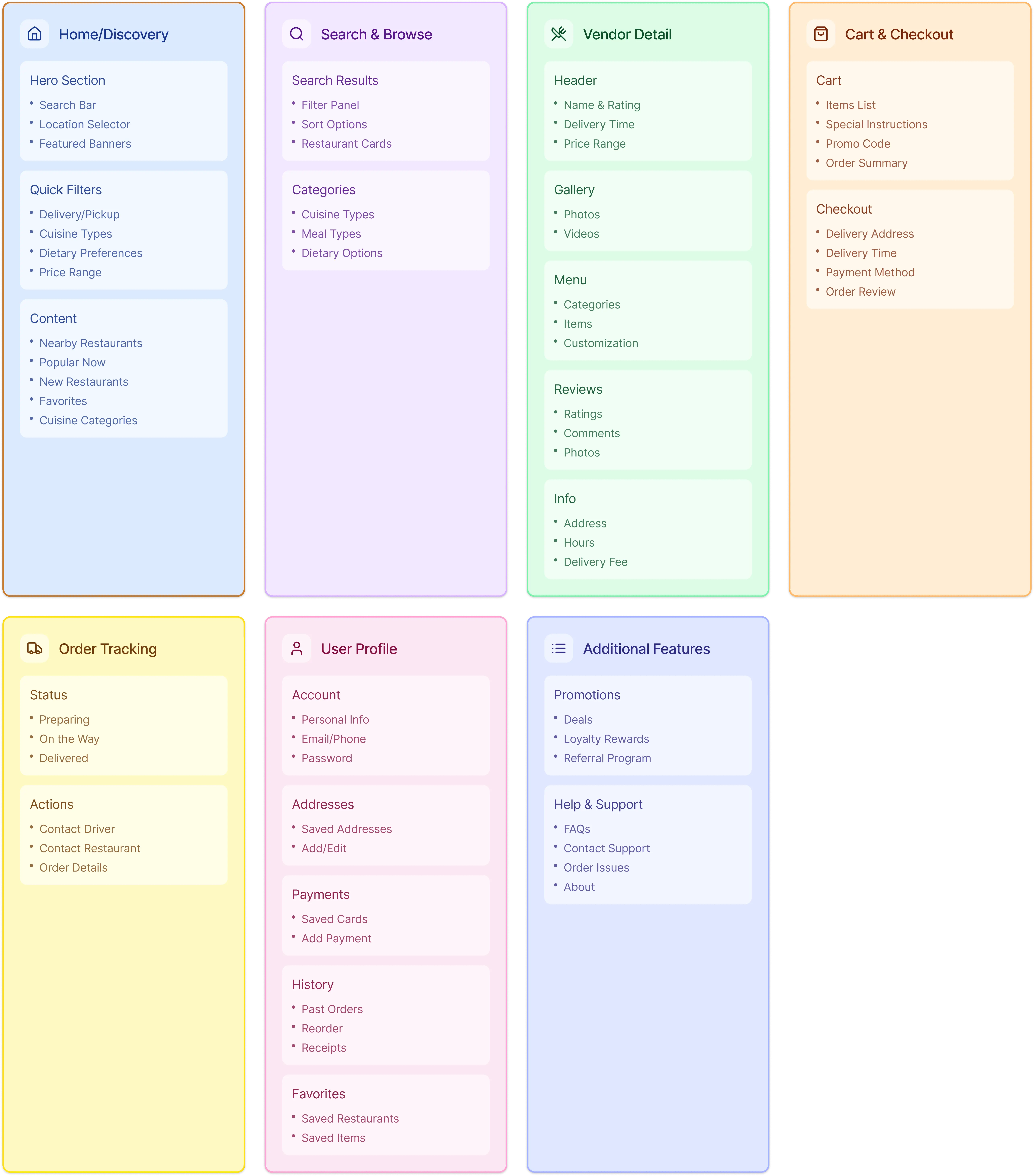
Simplified navigation
Contextual decision support
KeyProduct Decisions
Image-First UI
Users trust visuals over text
Image-First UI
Users trust visuals over text
Reduced Complexity
Removed unnecessary filters
Reduced Complexity
Removed unnecessary filters
Structured Vendor Info
Builds trust beyond ratings
Structured Vendor Info
Builds trust beyond ratings
Simplified Navigation
Trade-off: less depth, more clarity
Simplified Navigation
Trade-off: less depth, more clarity
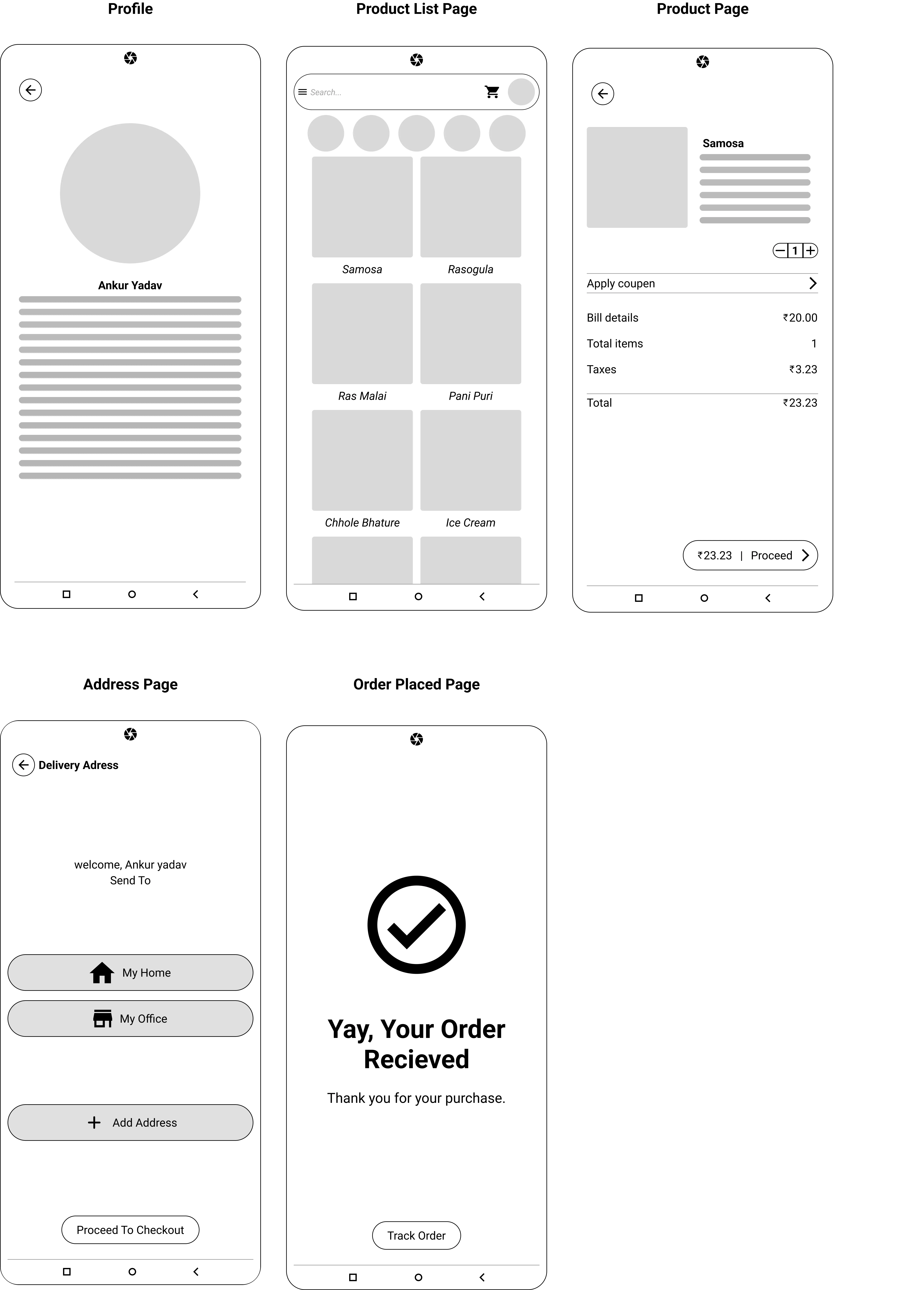
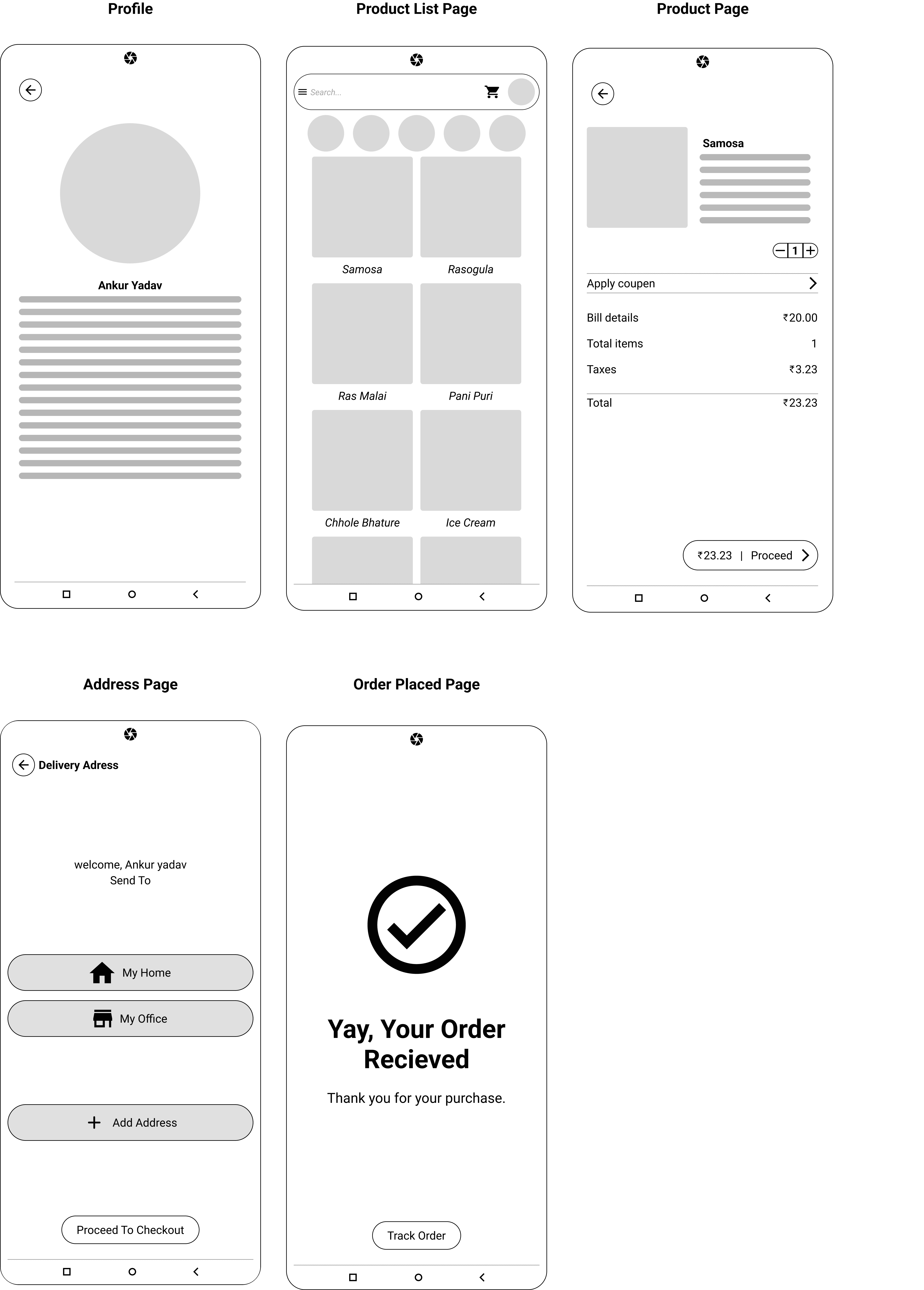
Design 'Wireframs'
Wireframes → Low-Fidelity
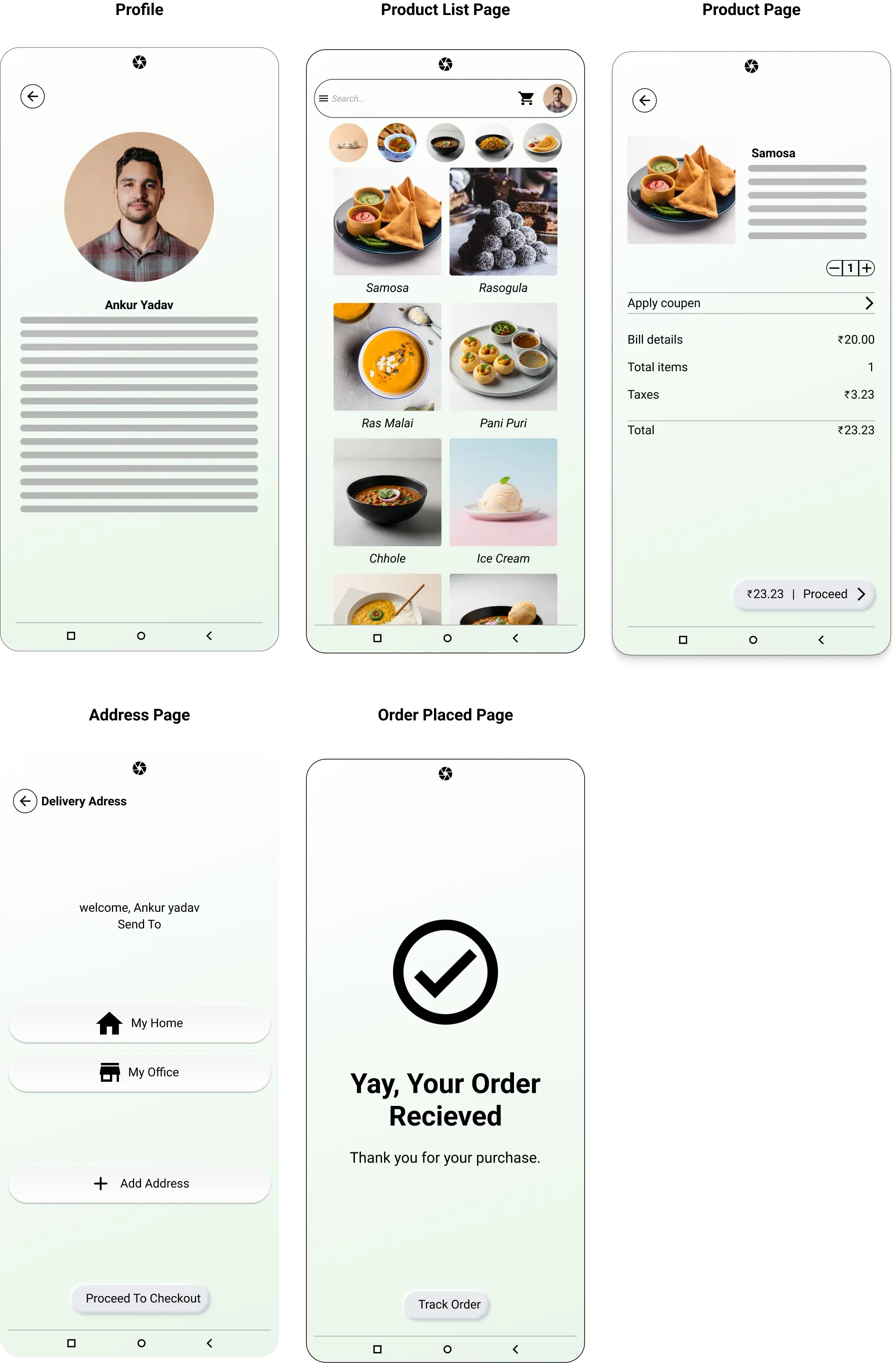
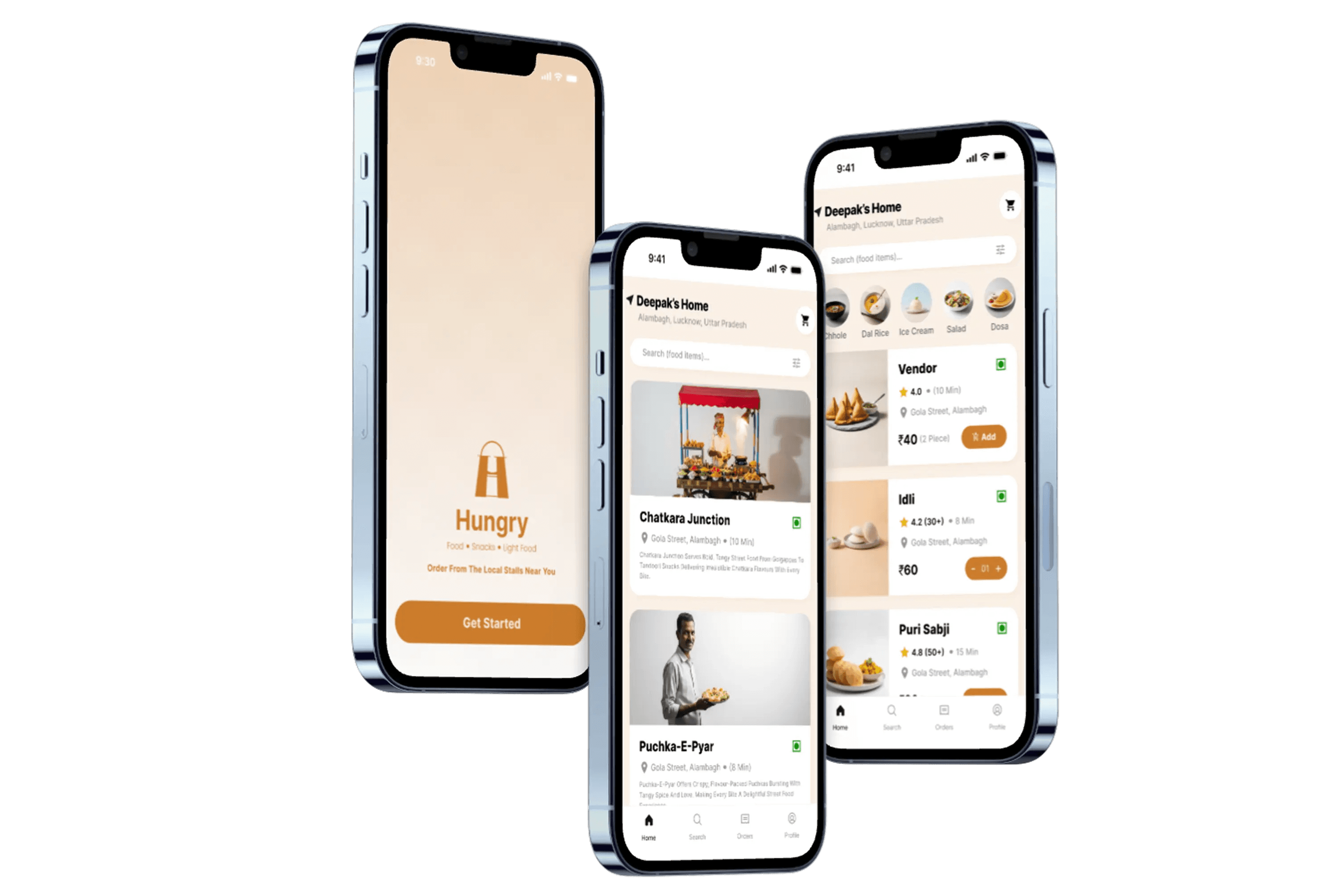
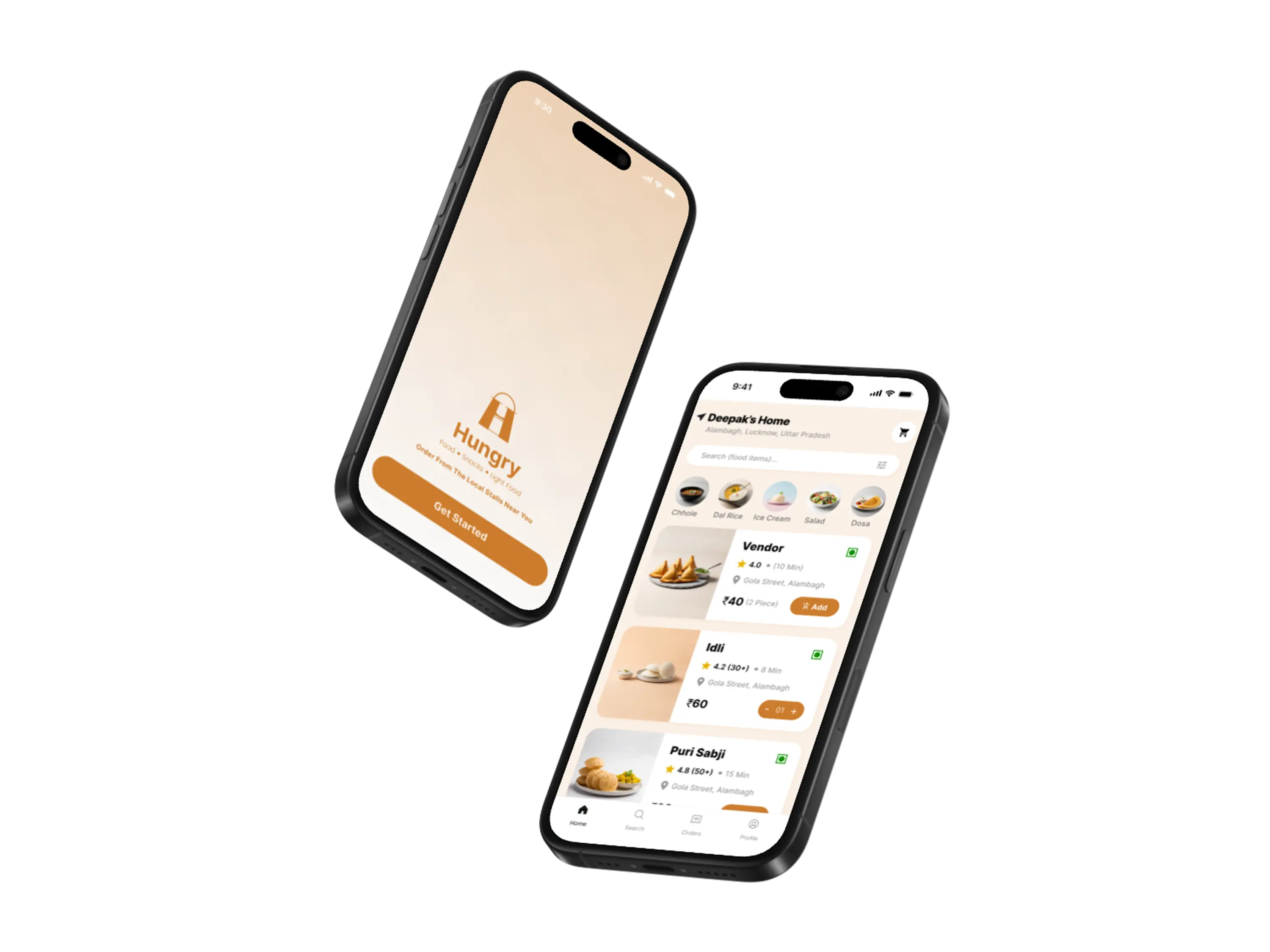
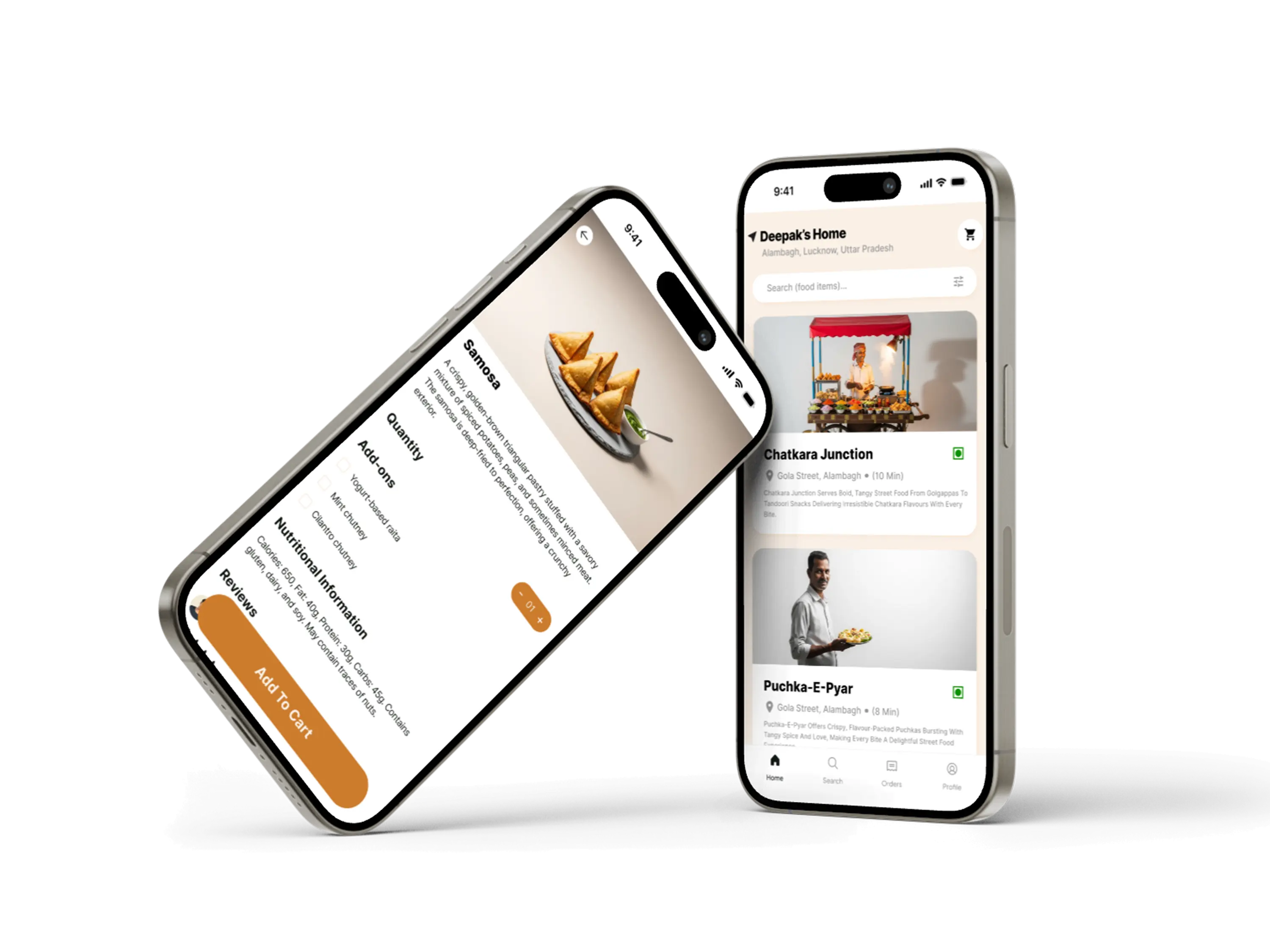
High-Fidelity 'Wireframs'
Usability 'Study'
The app design received positive feedback for making it easy to find and order local food. Usability studies led to key refinements, such as:
User journeys were simplified based on feedback for smoother experience.
App integrated vendor ratings and stories after user suggestion.
Storytelling about regional food added emotional depth to the product.
Better colour contrast and readable design enhanced usability for all.
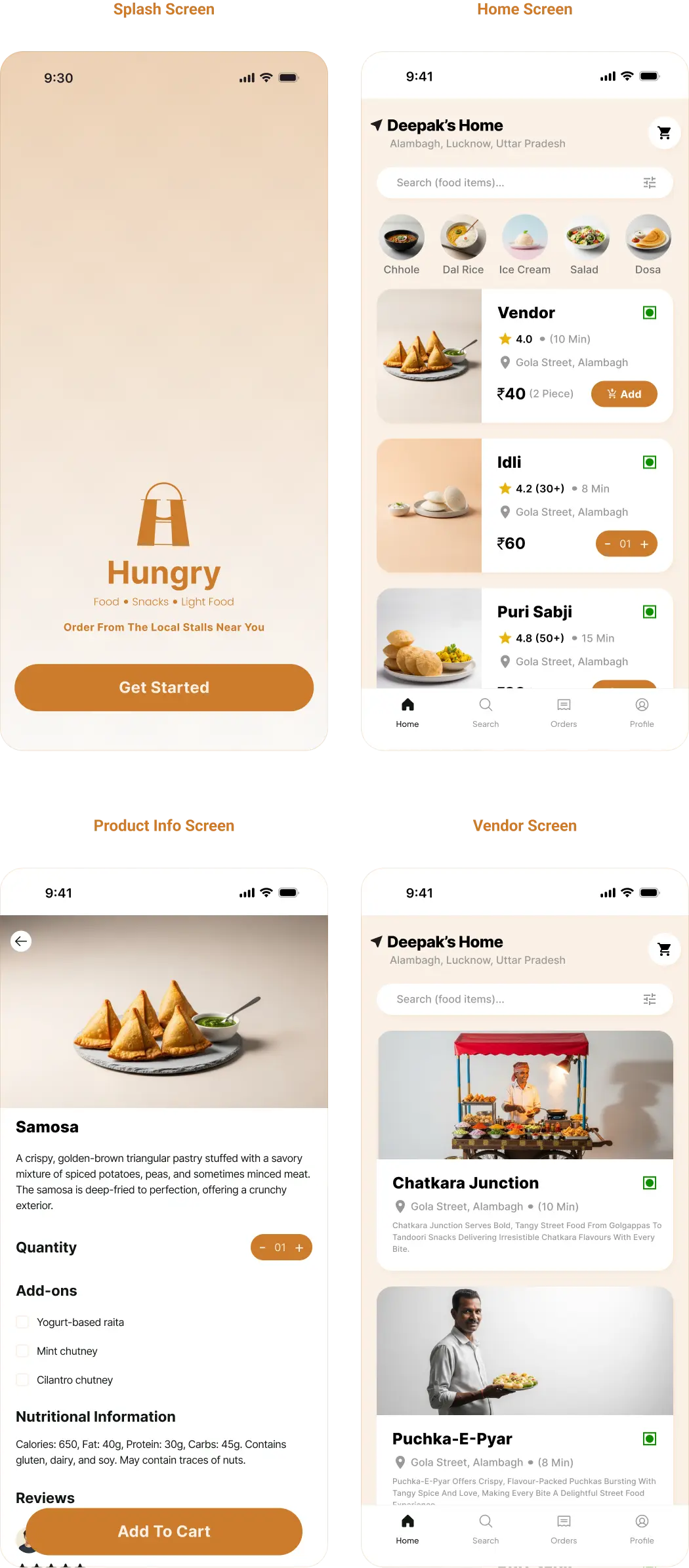
Mockup improvements led to higher satisfaction in usability testing.